
Wingfoilen voor beginners: wat heb je nodig om te starten?
Suddenly, you see them everywhere: people floating above the water without lines, without harnesses, with a small wing. Wingfoiling has exploded in the Netherlands in four years, and in our shop in Haarlem, we hear the same question almost daily: "What do I need to start wingfoiling, and where should I begin?" Below, we've outlined wingfoiling for beginners, in clear Dutch and without any fuss.
What is wingfoiling, briefly explained
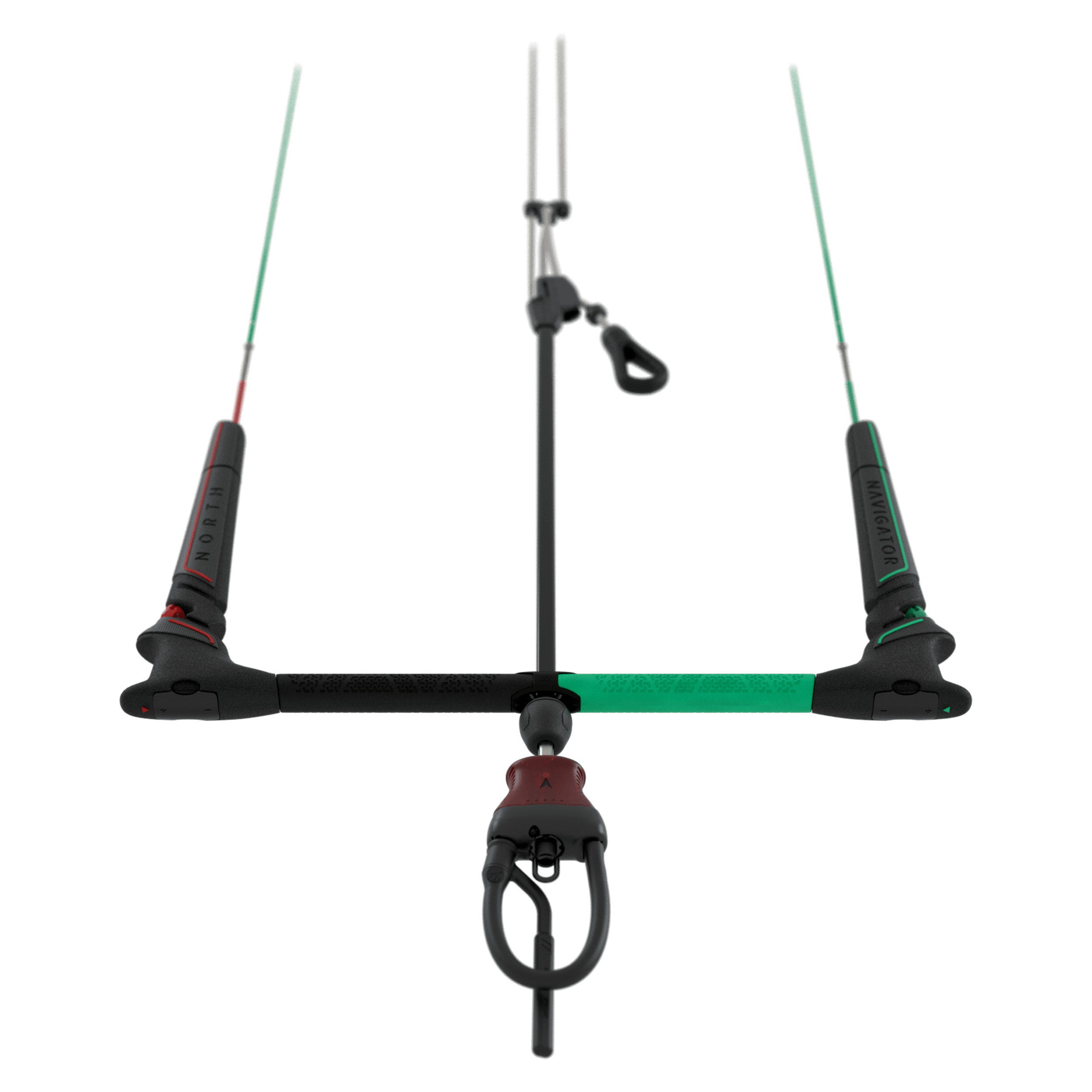
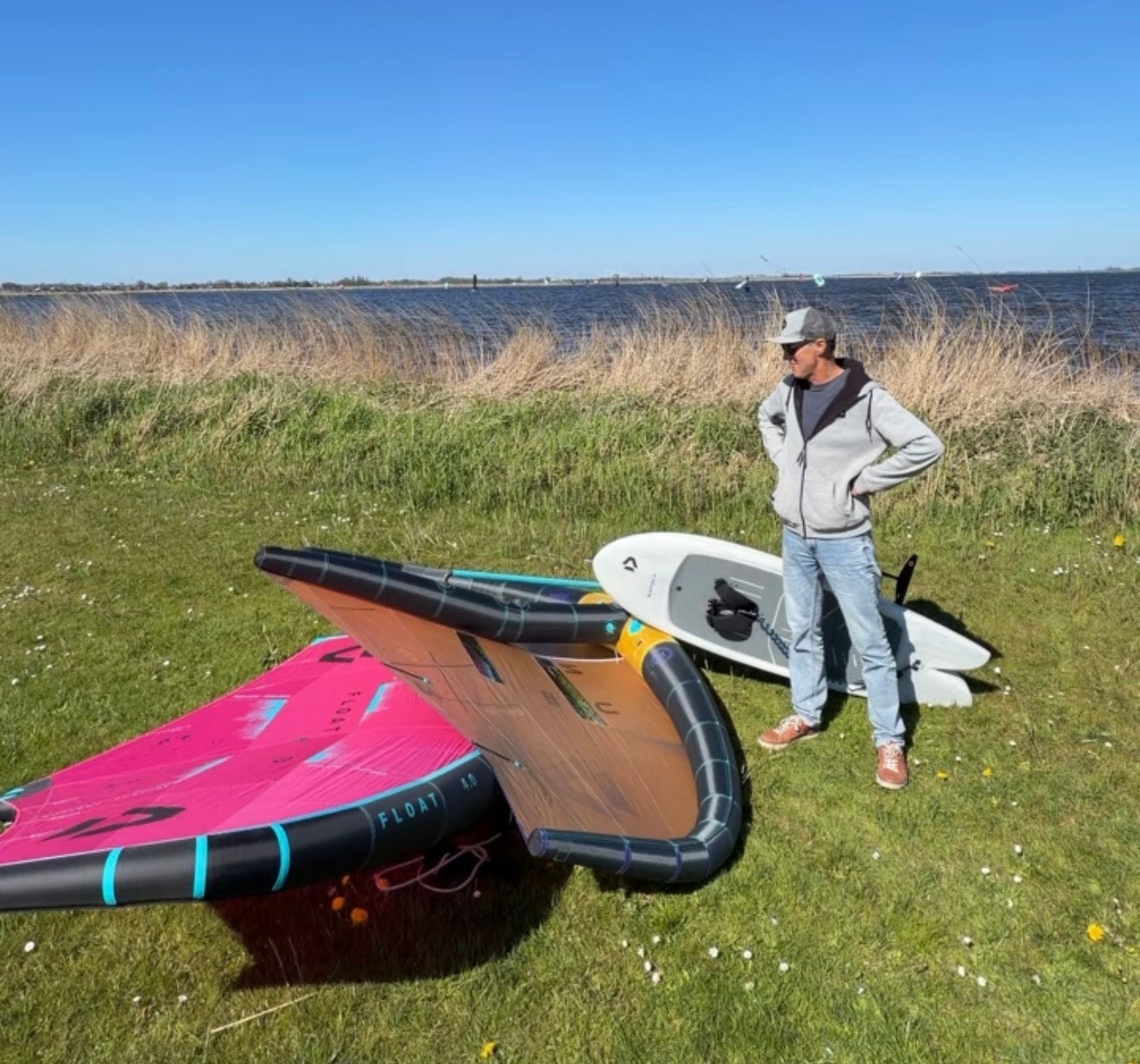
You work with three components: an inflatable wing in your hands, a board under your feet, and a foil under your board. A mast connects the foil and the board. You assemble your gear before the session and then step right into the water. The wind propels you, and the foil lifts you above the water. No lines, no upright mast.
It's easiest to learn on flat water. A lake like the Mooie Nel in Haarlem or the Uitgeestermeer is ideal: no waves, no currents.
For example, check out our partner Wingfoil Haarlem for lessons!
The wing: what size do you need?
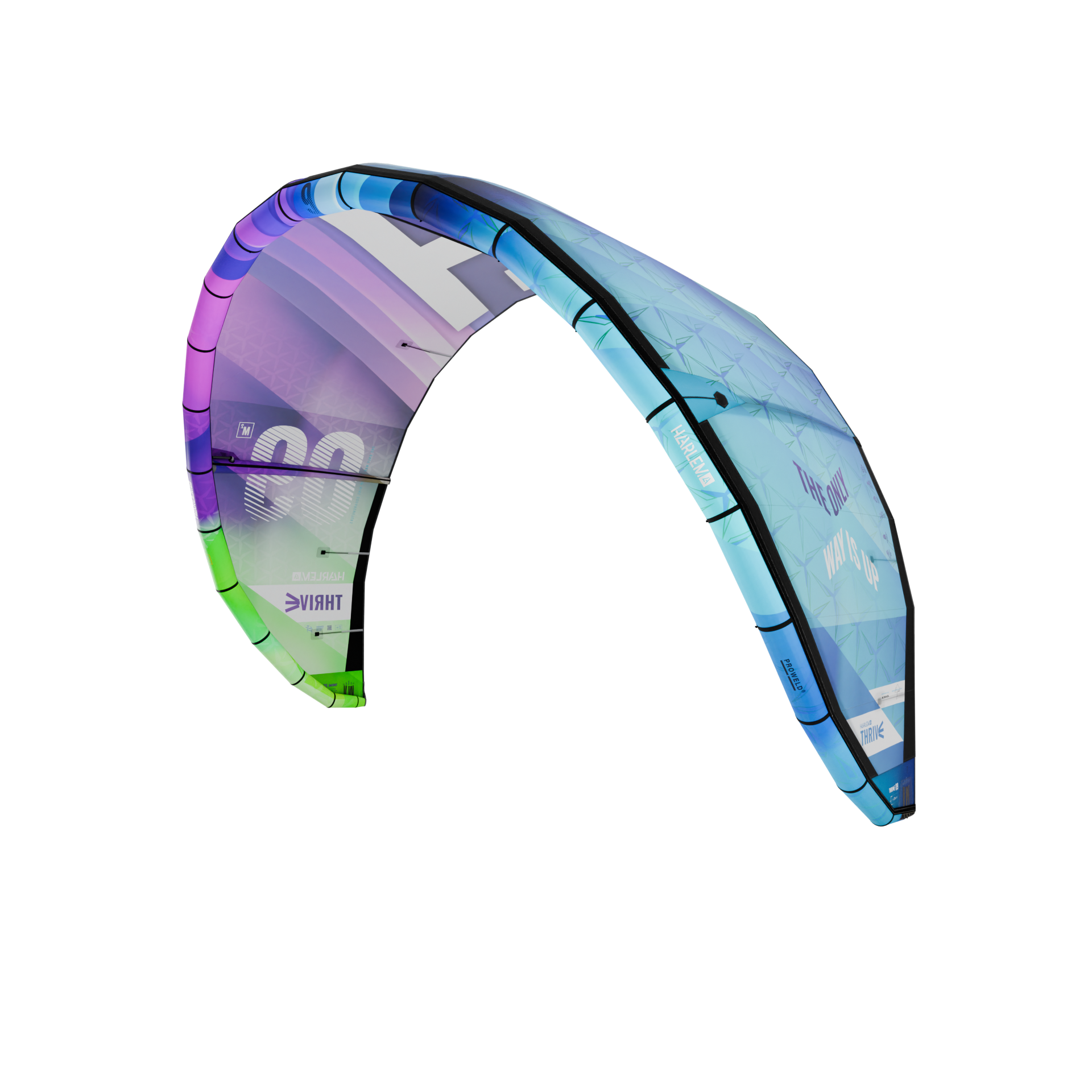
Your wing size depends on two things: your weight and the wind conditions you're sailing in. The sweet spot for learning is between 12 and 20 knots.
|
Weight |
Wind 12-15 kn |
Wind 15-20 kn |
Wind 20-25 kn |
|---|---|---|---|
|
60-70 kg |
4.5-5.0 m² |
4.0-4.5 m² |
3.5-4.0 m² |
|
70-85 kg |
5.5-6.0 m² |
5.0-5.5 m² |
4.0-4.5 m² |
|
85-100 kg |
6.0-6.5 m² |
5.5-6.0 m² |
4.5-5.0 m² |
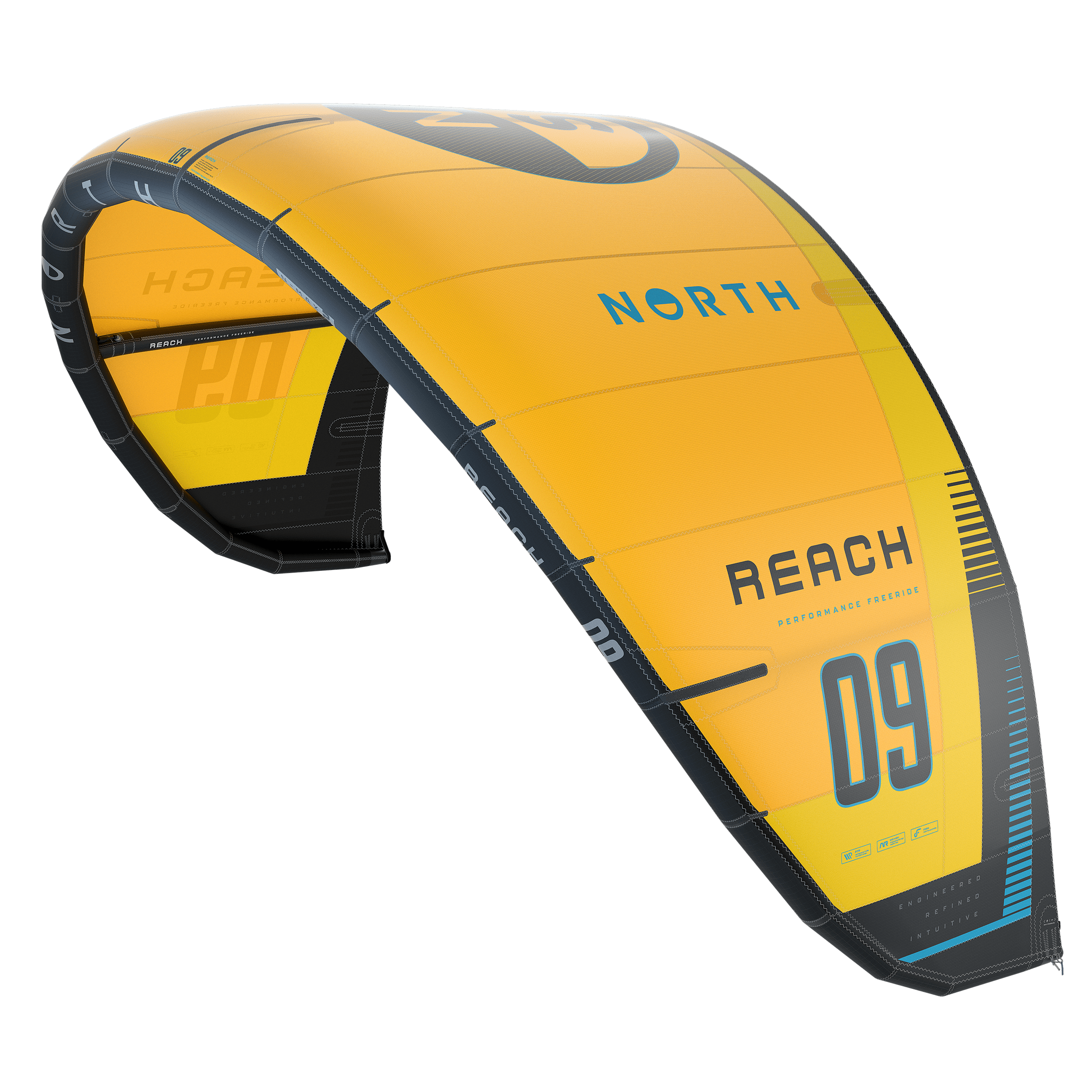
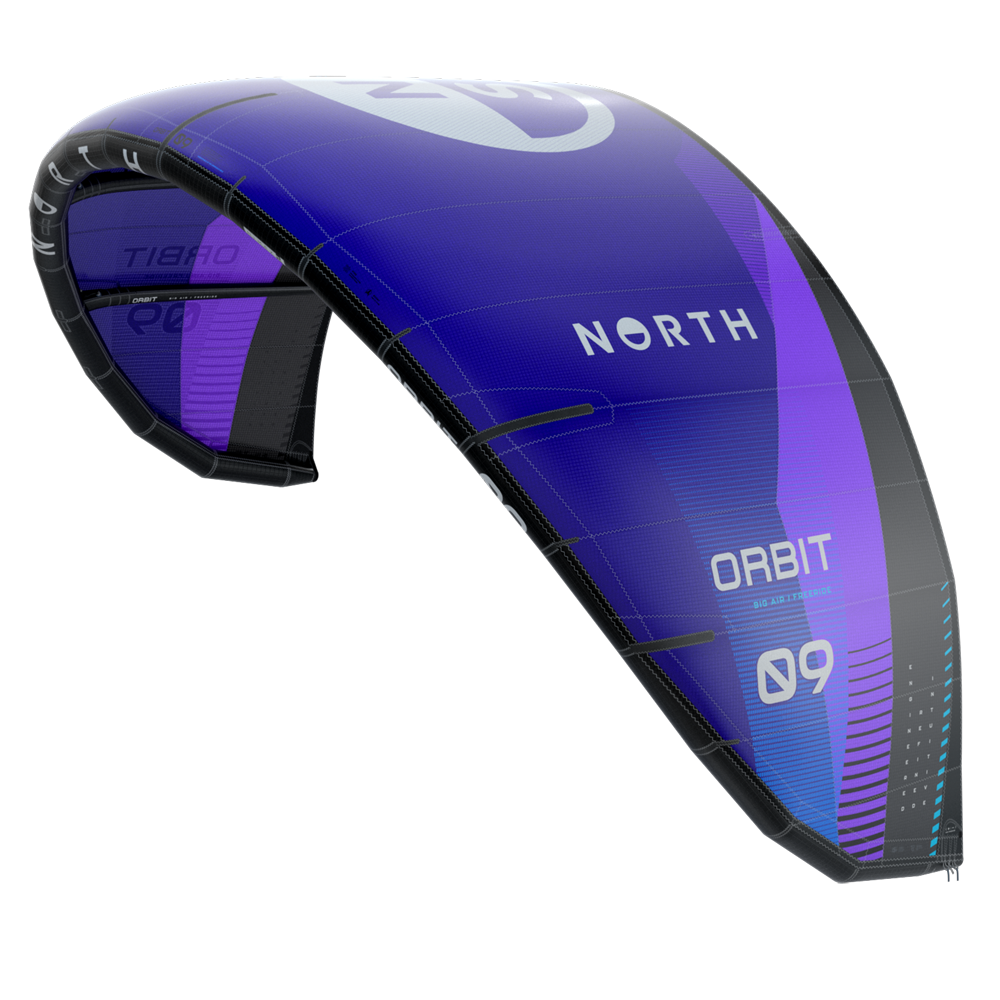
For most beginners, a wing around 5.0 or 5.5 m² is the comfortable size to start with. Later, you can expand with a second wing for lighter or stronger wind days. We sell Duotone, North, F-One, and Naish, four brands each with their own riding feel. Which one suits you depends on your physique, your background, and your goals.
The foil: the invisible heart of the set
The front wing is the large wing underwater and determines how much lift you get. For beginners, look for a front wing of 1500 to 2000 cm² with an aspect ratio (AR, meaning the ratio of length to depth) between 5 and 6. Below 75 kg, 1500-1750 cm² is good for you. Above 75 kg, you'll want 1750-2000 cm² or more, so you get out of the water early even with light wind.
Foils generally come in three varieties. Low-aspect is round, thick, and stable: early lift, forgiving, no top speed. This is the best choice for learning. Mid-aspect is in between and great for continuing to ride for a long time. High-aspect is long and thin and is all about speed and gliding; you're not there yet. For 99% of beginners, low- or mid-aspect is the right choice. For a deep dive into foils, feel free to contact us; we'll be happy to explain everything about the different foils.
For the mast: 75 cm is beginner-friendly because of lower fall height, easier balance, and less chance of a hard bounce. 80 cm is the sweet spot for those who want to progress quickly and already have water sports experience. 85 cm and longer are for advanced riders in waves and upwind. For your first foil, choose 75 or 80 cm.
The board: more volume than you think
Rule of thumb: body weight in kilograms plus 30 to 40 liters. Specifically:
-
60-70 kg: 95-110 liters
-
70-85 kg: 110-125 liters
-
85-100 kg: 125-140 liters
Rather 10 liters too much than 5 too little. A larger board floats better, is less likely to sink, and gives you time to get the wing under control before you have foil speed.
What you shouldn't forget
A set is more than just a wing, foil, and board. What we always advise customers in Haarlem:
-
Helmet. Foils are sharp, boards are hard. Wear it!
-
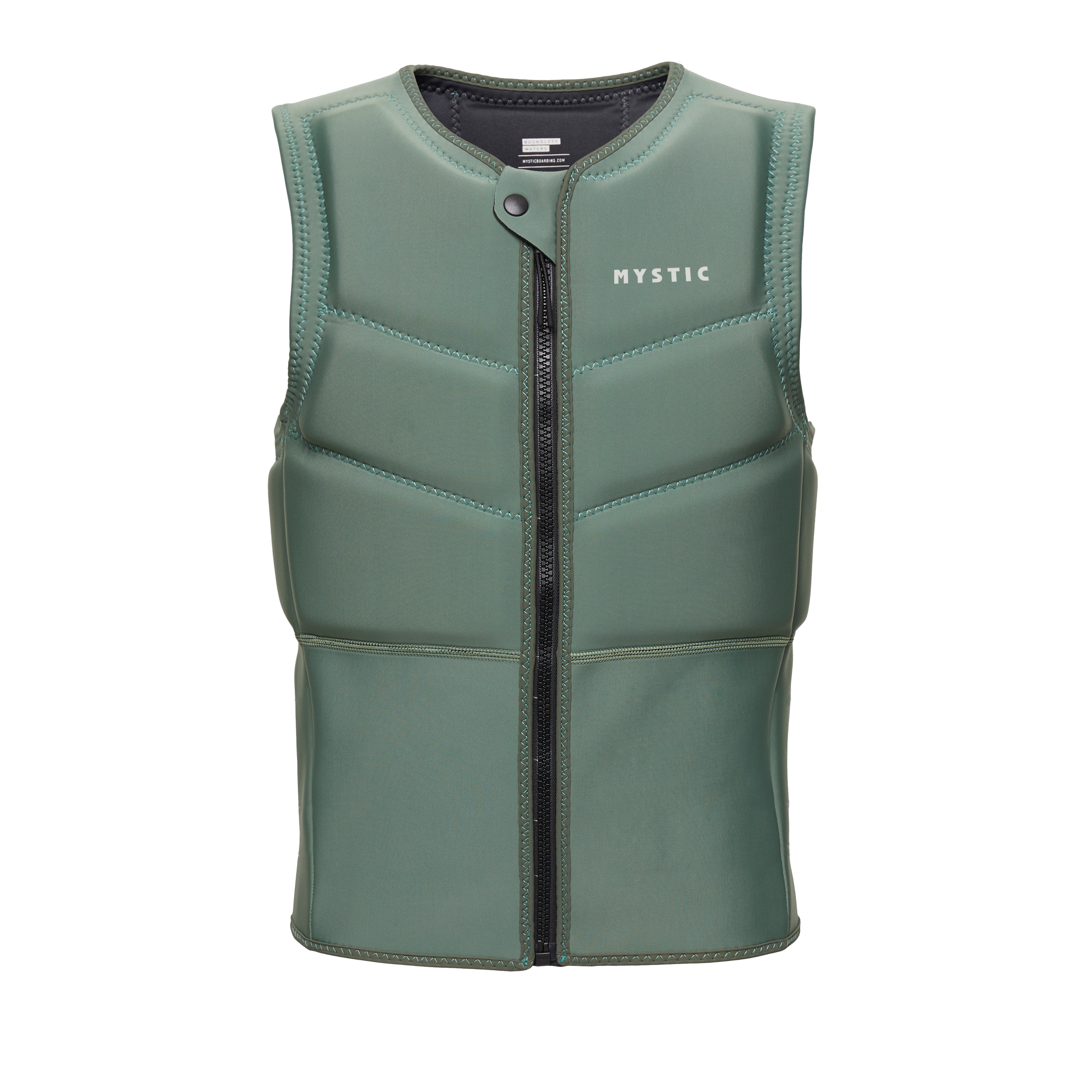
Impact vest. Protects ribs and torso during falls, provides a bit of extra buoyancy, and keeps you warmer.
-
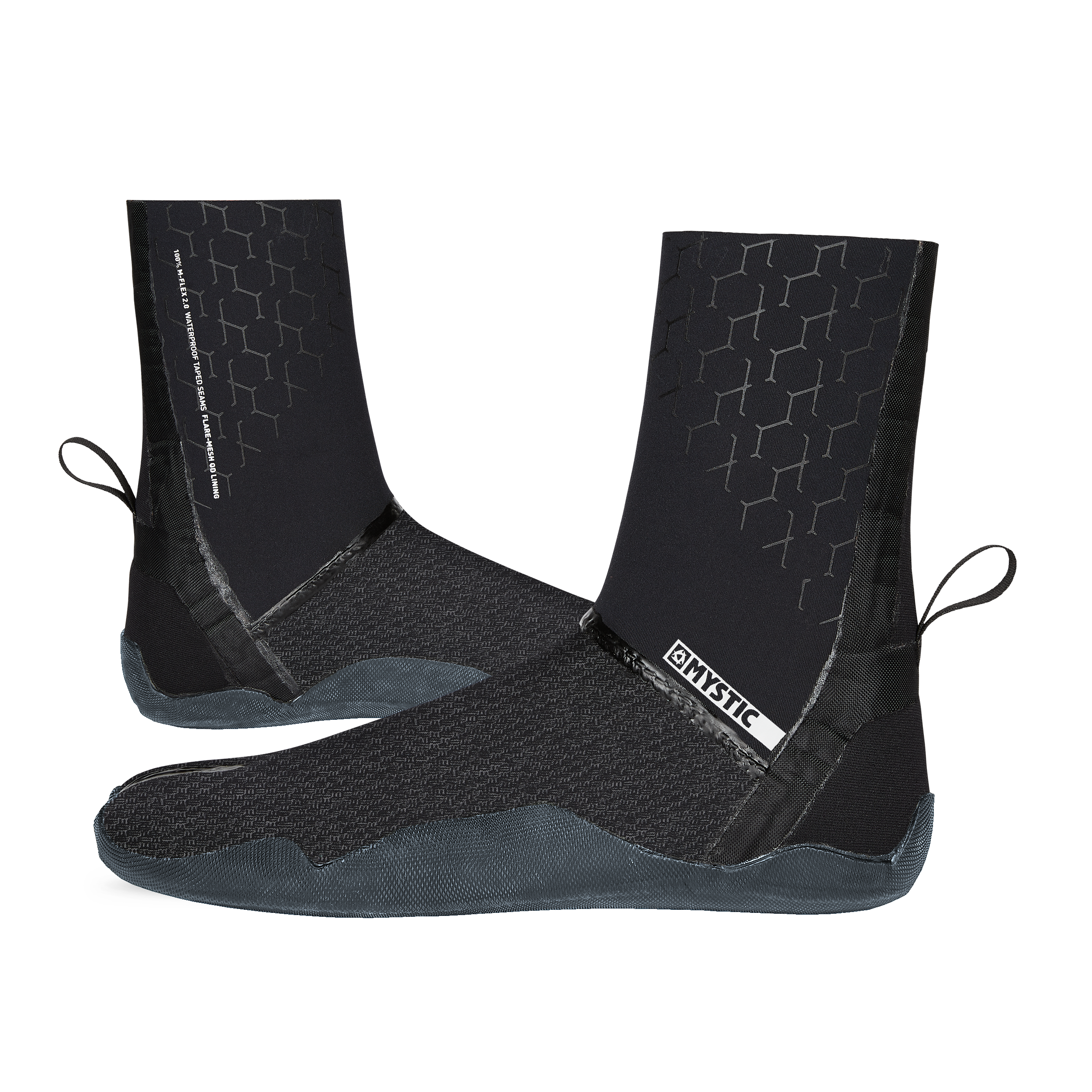
Wetsuit. For the Dutch summer a 4/3, for spring and autumn a 5/4.
-
Leashes. One for your wrist for the wing, one for your ankle or calf for the board.
This is part of the gear, not an extra. Especially on the North Sea beach, you'll be grateful for a good 4/3 and a helmet on your head.
Beginner sets in our shop
Four sets we regularly recommend:
-
F-One Wingpack. Wing, board, and foil as one package, well-matched. From 2,100 euros, a logical entry and easy to upgrade.
-
Duotone Sky Free set. Board and foil as a ready-made beginner set. Very stable, designed to quickly gain ground.
-
North Sonar Learn to Foil. Beginner setup within the Sonar line. A slightly different riding feel, especially good for those transitioning from kitesurfing or windsurfing.
-
Naish beginner-set. Fourth option with its own character, popular with those looking for something different from the F-One or Duotone feel.
Which set suits you depends on your weight, your background, and what you want to ride in two years. We want to consider that before you take anything home.
Our tip: come visit
Choosing a setup for yourself is difficult from your phone. Guido Hendrix is in our shop in Haarlem and, along with our other specialists, will look at your weight, background, and ambition. A fifteen-minute chat in Haarlem can save you many wrong purchases.
Would you prefer to consult at the waterside or via our WhatsApp community? Stephan van den Berg, former windsurfing Olympian and our wing authority, is available there for advice and first-aid questions during your session.
Frequently asked questions
How much does a complete beginner wingfoil set cost?
The F-One Wingpack starts around 2,100 euros for a complete entry-level setup. Sets with higher specs go up to 3,500 or 4,000 euros. Older models or second-hand can be significantly cheaper.
What size wing do I need if I weigh 80 kg?
At 12-15 knots, a 5.5-6.0 m², at 15-20 knots, a 5.0-5.5 m². One wing around 5.5 m² is a logical start.
Which mast length is good for beginners?
75 or 80 cm. Shorter means less fall height and more balance in your first sessions.
How big should a beginner wingfoil board be?
Your weight in kilograms plus 30 to 40 liters of volume. Better too much than too little.
What is the difference between low aspect and high aspect foil?
Low-aspect is round and stable with early lift. High-aspect is long and thin and is all about speed. Beginners want low- or mid-aspect. Note that much more than just an aspect ratio influences the properties of your foil. Feel free to contact us to learn more about this.
Do I need a helmet and impact vest?
Yes. Foils are sharp and boards are hard; falls can turn out nasty in shallow water.
Can I learn wingfoiling without lessons?
It's possible, but with a few lessons, you'll be on the foil much faster. We gladly collaborate with Wingfoil Haarlem, a nearby school with whom we have good experiences.
How long does it take until I can wingfoil?
With lessons and the right set, you'll often be briefly on the foil after 4 to 8 sessions.
Ready to start?
Doubting about the right set? Send a message via WhatsApp to +31 6 30 48 71 26, email info@kitesurfshop.nl, or visit us at Jan van Krimpenweg 9 in Haarlem. We prefer to help you choose well in advance rather than exchanging later.