
Welke Front Wing kies je? Aspect ratio uitgelegd
Which Front Wing do you choose? Aspect ratio explained
The Front Wing under your board (also called a foil wing) does 95% of the work. Which Front Wing you choose determines how your foil feels: playful or stable, fast or forgiving, for light wind or for strong conditions. Many wingfoilers get their first set without fully understanding why that particular Front Wing. And when you're ready for a second one, the choices quickly diverge.
In this blog, we explain how to choose a Front Wing. You'll learn what aspect ratio means, why surface area still matters, what the Stabilizer does, and when shims become interesting. By the end, you'll know which type suits your riding style and your spot, whether you're riding on Mooie Nel, the Uitgeestermeer, IJmuiden, or Zandvoort. Still in doubt? In Haarlem, you'll always find the answer with us.
What is aspect ratio and how do you calculate it?
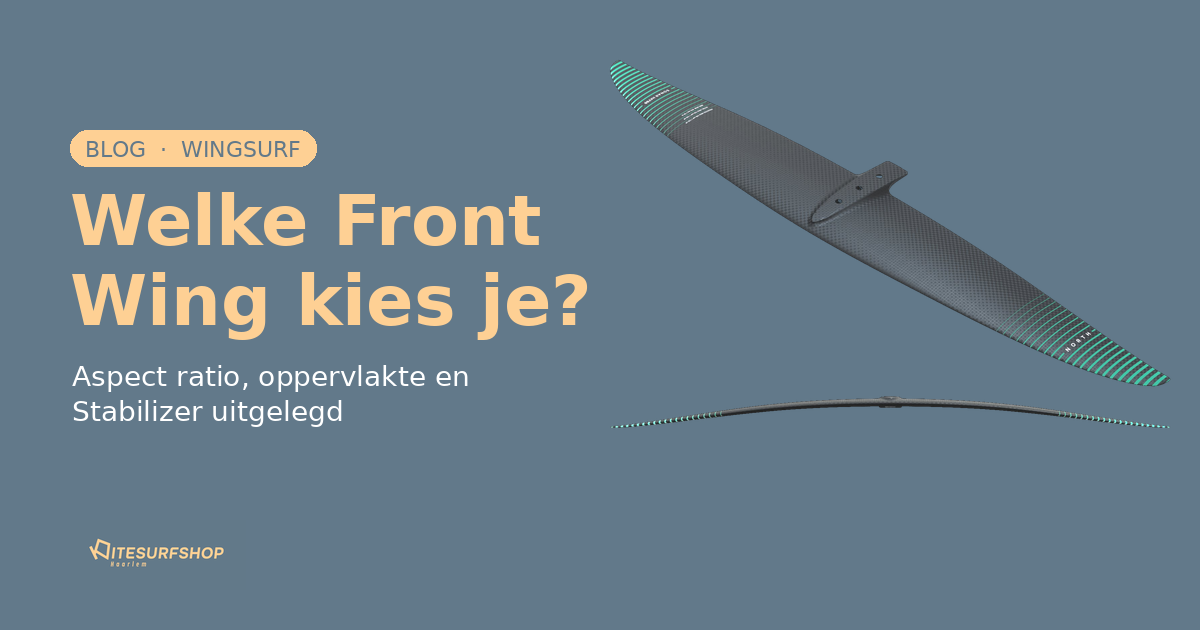
Aspect ratio (AR) describes the shape of your Front Wing. A long, thin Front Wing has a high AR. A short, wide one has a low AR. The formula is simple:
AR = (span x span) / surface area
Example: an Armstrong MA1225 has a span of 93.5 cm and a surface area of 1225 cm². Then you calculate 93.5 x 93.5 / 1225 = 7.14. That's a mid-to-high aspect.
We divide the assortment into three categories:
-
Low aspect: AR below 6
-
Mid aspect: AR 6 to 7.5
-
High aspect: AR above 7.5
Below you'll find what you get per type.
Low aspect Front Wing (AR below 6)
Lots of surface area, short span. The stable workhorse of the assortment.
Advantages:
-
Low stall speed (the minimum speed to stay in the air)
-
Easy to control at low speed
-
Forgiving: small mistakes are not punished severely
-
Blunt ends, so less chance of cuts in case of falls or transport
-
Good for light wind
-
Suitable for slow waves (you won't catch the swell as quickly)
Disadvantages:
-
Less suitable for pumping (foiling without kite or wing)
-
Smaller speed range
-
Slightly more drag in the water
For whom: beginners, light wind specialists, and wave riders who catch slow swell. In our shop, you'll find this type in the North Sonar MA series and the F-One Phantom in the larger sizes.
Mid aspect Front Wing (AR 6 to 7.5)
The golden mean. No extremes, reasonable in everything. Medium stall speed, medium forgiveness, medium top speed.
A mid-aspect works well as an all-around Front Wing for those who ride in different places or combine multiple disciplines: wing, kite-foiling, prone surfing. Excels nowhere, lacks nowhere.
Specifically: the North Sonar MA1050 is at AR 6.2 and is a typical mid-aspect. For comparison: the Sonar SF930 is at AR 8.8 and already falls into the high-aspect category.
For whom: advanced riders who want to get by with one Front Wing, or wingfoilers who are growing fast and don't want to upgrade immediately again.
High aspect Front Wing (AR from 7.5)
Long, thin, knife-shaped. Little camber, little drag.
Advantages:
-
Lots of glide (long riding with little power)
-
High top speed
-
Perfect for pumping: you ride on residual power between gusts
-
Keeping up with waves goes smoothly
Disadvantages:
-
Difficult kick-off, you first have to gain speed before the lift comes
-
Higher stall speed, so less forgiving at low speed
-
Less stable when riding slowly
-
Not for beginners
-
Sharper edges, be careful when falling and transporting
For whom: advanced riders, race riders, downwinders, and surf riders who keep pumping on fast waves. Example from our shop: the North Sonar SF930. Tip: for such a high-aspect Front Wing, a good foil bag is wise, because the tips are more vulnerable than on a low aspect.

Surface area: just as important as aspect ratio
On the beach, people often ask "what size do you have?" and mean surface area. But without the type, that number says little. A 1500 cm² low-aspect behaves totally differently than a 1500 cm² high-aspect.
Rules of thumb per type for light wind:
-
Low aspect: 1500 to 2000 cm²
-
Mid aspect: 1300 to 1500 cm²
-
High aspect: from 1300 cm² (high aspect needs less surface area for the same lift)
More factors play a role in your size choice: your weight, in what wind you ride, the type of Front Wing, the dimensions of your board, and how much experience you have. That's why a general size chart falls short here. For personal advice, send us a message or visit us in Haarlem.
Stabilizer: small but decisive
The Stabilizer provides almost no lift. That's the Front Wing's job. What the Stabilizer does do: balance. It prevents you from being thrown forward or backward.
Two rules of thumb:
-
More Stabilizer surface area = more stability. Good for beginners and those who want to ride calmly.
-
Smaller Stabilizer = more playful. More aggressive turns, better for wave riding.
A complete foil set always comes with a Stabilizer that matches the Front Wing. As a beginner, you don't have to worry about this. Do you want to experiment with a different Stabilizer later for a different feel? Then we'll help you with that.
Spacers and shims: for those who want to tweak
A spacer (also called a shim or wedge) is a thin piece of plastic under the Front Wing or Stabilizer. This subtly changes the angle of attack. Result: it gets lift later and you accelerate more smoothly.
Not for the first month. But fun if you're riding well and feel like fine-tuning. Ask about it in the shop if you want to get started with this.
Which Front Wing suits you? Decision matrix
Quick guide based on what we most often advise in the shop:
|
You are... |
AR |
Surface area (direction) |
Example |
|---|---|---|---|
|
Beginner, light wind |
Low (<6) |
1700 to 2000 cm² |
North Sonar MA1800 |
|
Beginner, normal wind |
Low (<6) |
1300 to 1500 cm² |
North Sonar MA1225 |
|
Advanced, all-round |
Mid (6-7,5) |
1000 to 1300 cm² |
North Sonar MA1050 |
|
Advanced, speed and pumping |
High (>7,5) |
800 to 1100 cm² |
North Sonar SF930 |
|
Race / downwind |
High (>7,5) |
700 to 900 cm² |
North Sonar DW900 |
Important: these are indicative figures. Personal advice may differ based on your weight, your board, and your spot.
Don't forget on the water
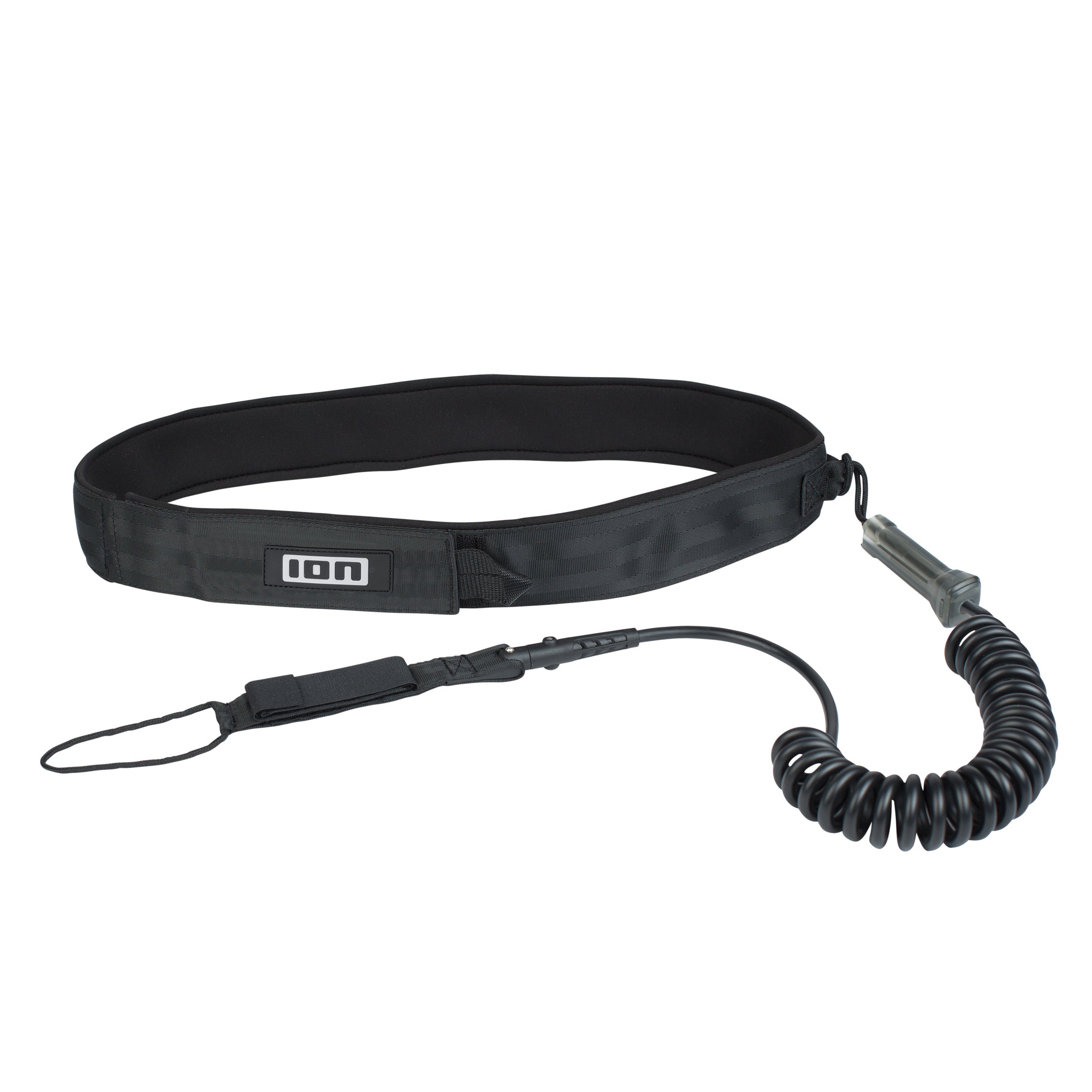
A new Front Wing alone is not a complete kit. An impact vest provides extra buoyancy and cushioning if you fall hard once. For your high-aspect Front Wing, a foil bag is a wise investment: the edges are sharper and more vulnerable. A good board leash and wing leash are essential for everyone. Helmet on? Put it on.
Our tip: Stephan thinks along with you
Stephan van de Berg, former windsurfing Olympian and our wing expert, will help you make your choice. He thinks along with you via WhatsApp and on the water, based on your weight, your wind range, and what kind of sessions you want to do. In the shop in Haarlem, all Front Wings are available, and Guido can help you with fitting and comparing. Do you still need lessons? Our partner Wingfoil Haarlem will get you on the foil in a few sessions.
Frequently asked questions
What is aspect ratio for a Front Wing?
Aspect ratio is the ratio between span and surface area. Formula: span x span divided by surface area. The higher the number, the longer and thinner the Front Wing.
Which aspect ratio is suitable for beginners?
Low aspect, with an AR below 6. Low stall speed, forgiving, easy to control at low speed.
What is the difference between low and high aspect Front Wing?
Low aspect has a large surface area and low stall speed: stable and forgiving. High aspect is long and thin: lots of glide and top speed, but higher stall speed and more difficult at low speed.
How big should my Front Wing be?
That depends on your weight, Front Wing type, your board, and your wind range. Rule of thumb for light wind: low aspect 1500 to 2000 cm², mid aspect 1300 to 1500 cm², high aspect from 1300 cm². For your situation, it's best to visit us or send a message via WhatsApp.
What does a Stabilizer do on a hydrofoil?
The Stabilizer provides almost no lift. It provides balance and prevents you from being thrown forward or backward.
When do I upgrade from mid to high aspect?
If you ride consistently, get up quickly, can steer at speed, and feel like pumping, downwinding, or riding longer on one gust of wind. In doubt? Stephan is happy to help you.
What is a shim or spacer on a foil?
A thin piece of plastic between the Front Wing or Stabilizer and the fuselage. It subtly changes the angle of attack, causing it to get lift later and accelerate more smoothly.
What size Front Wing do I need for light wind?
For light wind, choose more surface area. Low aspect 1700 to 2000 cm², mid aspect around 1500 cm², high aspect from 1300 cm². Take your weight and board volume into account. For your situation, it's best to visit us.
Ready to choose?
-
View our Front Wing collection on kitesurfshop.nl
-
Personal advice via WhatsApp: +31 6 30 48 71 26
-
Visit us in Haarlem: Jan van Krimpenweg 9, 2031 CE
Still wondering which Front Wing suits you? Send a message or drop by. Stephan will help you out.